
Trusting the Path
understanding, practice, imagination and community

How do we find trust in these times?
When warlords continue to tell us that war is the only way to peace whilst filling their hollow bellies with power and gold. When seven out of nine planetary boundaries have been breached and anxiety is the most prevalent health condition amongst children and young people. What do we trust?
When the structures and systems we’ve lived under for so long are revealing the ugliness of their true faces. When the ways we’ve kept ourselves small are surfacing to be felt and released. What do we trust?
We need to find trust, because beneath the ugliness something new and vibrant is being born. And birth happens with our active participation. It takes trust to navigate the unknown.
So what can we trust?
We can’t trust in certainty. Whether the certainty that everything will fall apart, or the certainty that everything will be OK, all certainty abdicates responsibility. It leaves us in denial, overwhelmed or frozen. And it’s simply untrue: the one thing we can be certain of is that we can never be certain about the future.
The truth is, we’re all creating the future together, right now in the present.
Everything moves in cycles, and cycles unfold through spiralling transformation. Our relationship with transformation, whether personal or collective, is the very thing which directs and informs it.
So our open-hearted and generous participation in transformation is a path we can trust.
Trust
Like all relationships, trust needs to be nurtured. In my experience, four ingredients help build a solid foundation for trust:
The first is understanding the nature of transformation. This is really important: without it we easily fall into doubt and overwhelm when things become shaky. Understanding is how trust grows through the mind’s perspective and clarity.
The second is practising an ongoing return from reactivity to presence. This is our active engagement with transformation. Practice is how trust grows through the body’s direct experience.
The third is imagining (and researching) our greatest potential. This is where our practice becomes aligned with what’s possible, even if it’s far from our current reality. Imagination is how trust grows through the heart’s vision and longing.
The fourth is community: coming together in support, solidarity, inspiration and joy. Remembering we can’t do this alone, we lift each other up and allow ourselves to be lifted. Community is how trust grows through togetherness.
Understanding Transformation
Recognising the arc of transformation can help us navigate its inevitable dark nights, as we bring more of life into loving presence.
A useful way to describe this arc comes from the Four Stages of Competence model which describes the journey of learning something new. We begin with unconscious incompetence (not yet aware of how little we know), move to conscious incompetence (seeing how little we know), then to conscious competence (learning something new), until we finally arrive at unconscious competence (mastering that skill).
Overlayed onto inner and outer transformation, a path emerges which you might recognise from your own messy and beautiful life (or from our collective messy and beautiful journey):
We start with unconscious reactivity in one area of personal and collective life. (A personal example: being unaware that my reaction to perceived abandonment was filtered through a trauma lens. A collective example: for most of recorded history slavery was taken for granted as a necessary and normal part of economic life.) These are the places we’re unaware of being reactive.
At some point this evolves into conscious reactivity. (Personal: I began to notice that the pain I experienced and my reaction to it was disproportionate to what actually happened; I still reacted, but I noticed and questioned this. Collective: the coordinated abolitionist movements of the 18th and 19th centuries; people started talking about slavery.) We see what we hadn’t seen before.
This sets the stage for conscious presence. (Personal: I started pausing from reactive action to feel the anger behind it, pausing again to feel the fear and grief behind that, whilst communicating with humility and asking for support. Collective: the legal slave bans across Europe and the Americas and a moral reorientation.) We try something new.
At some point, often unnoticed, we find ourselves embodying loving presence in that particular area of life. (Personal: at some point, being “left behind” was no longer triggering; no friction meant no suffering. Collective: this is a work in progress, since the economic and social conditions which enable forced labour and human trafficking are still around… so we keep cycling through conscious presence.) As we evolve towards loving presence, we live with more ease, harmony, peace, creativity, joy, love and fulfilment.
These are all necessary stages of growth and transformation. We would prefer to arrive at loving presence without any effort, but that’s not how transformation works.
Most importantly, the two middle stages (conscious reactivity and conscious presence) really benefit from awareness and support. They are the places we most easily lose ourselves in doubt, overwhelm, blame, shame or guilt. It’s here that we often fall back into new forms of reactivity.
Let’s look into these stages in more detail.
1. Unconscious Reactivity
There are so many ways (in our lives and in the world) that we operate with little or no awareness. We react to certain triggers in the same old ways, despite the suffering which follows. We accept structural and social inequalities and injustices, just because they’ve always been there. We trust figures of authority, just because that’s the way we’ve been conditioned.
Unconscious reactivity is what we do individually and collectively based on habitual, conditioned behaviours and patterning. We don’t know what we don’t know: there might be many ways you and I do things which are hurting us and others that we’re still blind to.
But we do know what suffering feels like, and reactivity always creates suffering. So suffering is actually a messenger and guide. If we’re willing to listen, it leads us from unconscious reactivity towards conscious reactivity.
2. Conscious Reactivity
At some point, usually because we’re suffering, we begin to see what has always been here. We notice the patterns we fall into, the relationships we tend to repeat, the ways we react when we feel abandoned, afraid or under attack. We notice how we suppress, drown or embellish certain emotions. We recognise that treating some as lesser than others and reducing any being to a useful commodity is not OK.
We’re still reactive at this stage, but we start to see things for the first time.
I remember a student who was new to meditation telling me her mind was wilder and her thoughts louder than ever before. In fact, she was finally paying attention to the wild loudness which had always been there.
Conscious reactivity is really uncomfortable. It’s where I find myself in relation to the world stage: with greater awareness of the depth of embedded patriarchy, the violence of imperialism, the methodology of settler colonialism, the functioning of capitalism. It’s as if all of this were new, but of course none of it is new. I’m seeing it clearly for the first time.
This is conscious reactivity, and it’s the first true step of transformation.
Transformation is a destructive process. We need to see clearly before we can undo what no longer serves. As old ways die, they often thrash about in increasingly extreme attempts to re-establish their footholds: the great powers of the world have become caricatures of themselves in recent years.
It’s here that new forms of reactivity easily creep in as we fall into a different flavour of unconscious reactivity. Voices of doubt and shame might hijack us as we exit a toxic relationship or drop destructive addictions. Voices of overwhelm and guilt might freeze us from useful action. Voices of blame might polarise and simplify matters (as if resolution could be found by removing one villain).
We might become conscious of one form of reactivity, only to fall into another version of unconsciousness. Sometimes we cycle between conscious and unconscious many times before we’re really ready to say No. Before we finally choose another way.
3. Conscious Presence
Choosing another way is the start of conscious presence. It’s the choice to participate in this moment without creating further suffering. It’s where most contemplative practice and activism sits (if there’s enough awareness and support to prevent either becoming another form of identity or addiction).
With conscious presence, even overwhelm, doubt, guilt, shame and blame can be teachers on the path. We learn to release their stories. We come into the body and breathe into the belly. We connect with nature and each other until we feel held and safe. We allow ourselves to feel the anger behind blame and shame; the grief behind guilt; the fear behind doubt and overwhelm.
From here, we’re no longer so polarised into black/white, good/bad simplifications. We’re no longer so frozen in fear or collapsed inside hopelessness.
Conscious presence allows us to become creative, choosing responses which bring greater benefit. The direct experience of the power of these choices helps us grow in confidence and trust.
Yet this phase of transformation also spirals between reactivity and presence. We remember, and then we forget. We’re conscious, and then unconscious again.
Just like when we’re new to meditation: the mind wanders down familiar motorways of reactivity… we notice, unhook, and return to the new tiny footpath of presence we’re creating… only to wander off… then notice, unhook and return… again and again.
This spiralling nature of transformation means it can feel like we’re revisiting the same patterns again and again without any growth or change. But more likely, we’re meeting them now from a whole new perspective.
Perhaps we’re back in an avoidant relationship dynamic, but this time there’s more awareness and kindness, less overwhelming dependency? Or we believe feminism and social change are regressing, but perhaps the discomfort of those left behind is rising up to be included?
Spiralling between forgetting and remembering begins to grow new pathways of presence in our brains and our policies. We can’t envision the end result until we begin with the foundations. Conscious presence asks for cathedral thinking, as Greta Thunberg put it in 2019. She said, “We must lay the foundation while we may not know exactly how to build the ceiling.”
This is where we are now. Millions are falling into a backlash of unconscious reactivity as old ways are crumbling. But millions are also endeavouring to build a cathedral founded on principles of love, care, relationship, reciprocity and respect. Millions are imagining a more beautiful world, supporting others already skilled at actualising this world. Millions are more and more willing to make the apparent sacrifices needed for greater flourishing for us all.
4. Loving Presence
Understanding transformation, practising presence, imagining wholeness and coming together in community, together grow a cathedral of love.
Loving presence is living inside that cathedral. With gratitude for all the personal and collective effort which came before. Knowing how much it took to place each brick of its hidden foundations.
We don’t always notice the golden thread of loving presence in our lives or communities. Often the best evidence of reactivity dissolving is… nothing. Rivers are no longer polluted. Children are no longer anxious. Nations are no longer at war. There’s nothing to see, no drama to report.
Sometimes we need to look back to notice how far we’ve come.
If you look closely, you might notice areas of your life of relative peace, ease and freedom — where once there was friction, tension or confusion? Most likely, loving presence exists somewhere, even alongside unconscious reactivity. Noticing this grows trust.
Collectively, we haven’t found loving presence yet, but things are evolving, even if it doesn’t feel that way all the time. The last 75 years have seen a huge rise of feminism, antiracism and environmentalism, with broadening inclusion of gender, sexuality, neurodiversity and more. The right-wing backlash to all of these things highlights their common ground: their shared foundations in patriarchy. It also highlights patriarchy’s panic. Its dominance is crumbling and it’s flailing more wildly to reassert itself. But participation is always a choice.
The struggles unfolding right now are not new, but the ways we’re speaking about them are. We are growing, even as we spiral and dip back into regressions.
No path is linear. The practice is to trust in the spiral.
Doubt
Inevitably, there are moments of doubt.
Doubt was the last veil to fall away before the Buddha awakened. It arose as a demon called Mara who snarled at him, “Who do you think you are, sitting here trying to attain enlightenment? Who do you think you are to be worthy of awakening?”
Do those background whispers sound familiar to you? Who do you think you are, doing your thing? What makes you think you’re worthy of existence?
Doubt in our validity and worth erodes trust more than anything else. Whether we collapse into diffidence or adopt facades of arrogance and narcissism, either way we hide who we really are. We lose the power and purity of our own authenticity.
The Buddha did none of this. When confronted by doubt, he simply said “I see you Mara” before reaching down to touch the Earth.
We can learn a lot from this.
Seeing doubt for what it is: a story in the mind. Touching the Earth to remember our intrinsic belonging. Asking nature to teach us about the spiralling path of transformation.
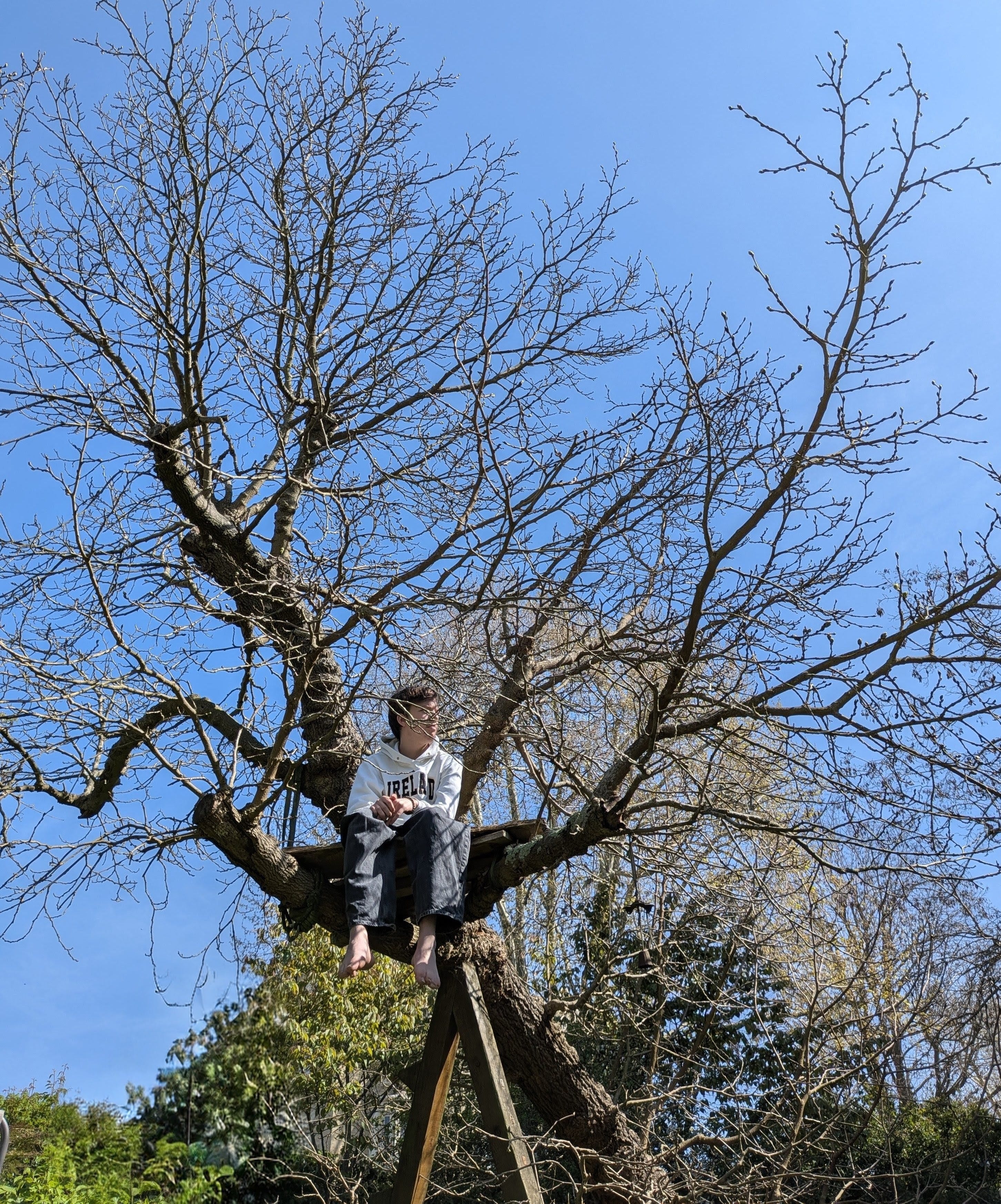
There’s a Mulberry tree in our garden that I learnt to climb as a child. Now it’s reclining in its old age. Sometimes I lean against its nobly bark and ask it to teach me about trust. It whispers back, “I never try to be someone else. I don’t worry that I can no longer stand up straight. I don’t wonder what my purpose is. I don’t fret if I’m good enough or wonder whether I could do more or better. I am who I am, and I’m changing all the time. What I know is this: by being who I am, showing up whatever the conditions, I’ve offered food, shelter and play to so many beings. Whether standing steady through countless storms and droughts or falling over if that’s what comes, I’ve breathed, grown, reclined and smiled. I know I’m alive. And life has taught me about trust. I am who I am, and I trust in that.”
Active Trust
Something foundational and fundamental is changing in our world. We’re in the birth canal of transformation and it’s painful and scary. The world around us no longer fits, and though we see a circle of light ahead we can’t yet see the world beyond it.
We need to trust, and we also need to remember that trust is active.
Birth doesn’t happen without our participation. Every baby needs to reach for the light of a new world they haven’t yet seen. Every baby must receive the discomfort of a home they’ve outgrown, trusting their instinct of something more, that a more beautiful world is possible. The smoothest labours are conversations between mother and baby dancing together, listening, moving, breathing, engaging with each other without knowing what might come next.
This active surrender into a shared unknown — this receptive participation in creating something new — emerges from nature every Spring. Its resilience and active participation in rebirth teaches us about transformation. It invites us to practise our own steps in the dance, imagining what’s possible whilst supporting and inspiring each other along the way.
Understanding, interwoven with practice, illuminated by imagination and emboldened by community: this is a path of love.
This is a path I can trust.
Join me
April 13-17, 7-8am, Sangha Live
We’ll be exploring everything I’ve shared in this newsletter, applying it to real life practice and experience, online with Sangha Live each morning next week from 7-8am (recordings available).
Sessions includes 15 minutes of reflections from me, 30 minutes of guided meditation, and 15 minutes of questions from you.
The June retreat in Devon is fully booked (join the waiting list here), but spaces are available for the September/October retreat in France.
September 26th - October 2nd, Moulin de Chaves, France
A silent yoga, meditation and embodied Dharma retreat.
On retreat we use each moment as a gateway to enter into a deep and authentic relationship with life. We cultivate an atmosphere of love which extends in all directions: towards each other, the natural world and this very tender human body, heart and mind. Every piece of the constellation brought home and held in love.
Register here
Yoga, Meditation, Cacao and Live Music
July 11th, 1.45-4.45pm, Home Wellness
Lucidia, Rafael and I will be back on July 11th for another afternoon of enchantment with yoga, meditation, cacao and live music.
Fridays 10.30am-12.30pm, Home Wellness
This weekly yoga and meditation class weaves together alignment-based yoga with deep reflection and meditation (in restorative or seated postures), infused with curiosity and kindness, and held by the beauty of community. Everyone is welcome.
Register here (the wonderful Yazmin Low is covering this Friday 10th; I’ll be back from Friday 17th)
*NEW BOOK RELEASE* (not mine… yet!)
I’m so excited to share the release of this beautiful and important book, written by my friend, colleague and mentee of over a decade, Soulla Demetriou. She is a truly wonderful and inspiring woman, specialising in self‑compassion, emotional mastery and inner freedom, all of which is shared in this book. The title speaks for itself: You Have Always Been Enough. Isn’t forgetting this at the heart of all our personal and collective suffering? What is more important than remembering this now?
She’s offering 40% off with the code ENOUGH40 from this link, and if you purchase before 9th April you’ll receive access to her free online Self-Compassion retreat on 25th April and three guided meditations to support you in integrating the work: register here.
As always Ayala expresses the potent and complex with a bright mind and vast heart 🙏